OpenAI Codex App Server Explained: A Dev's Guide (2026)
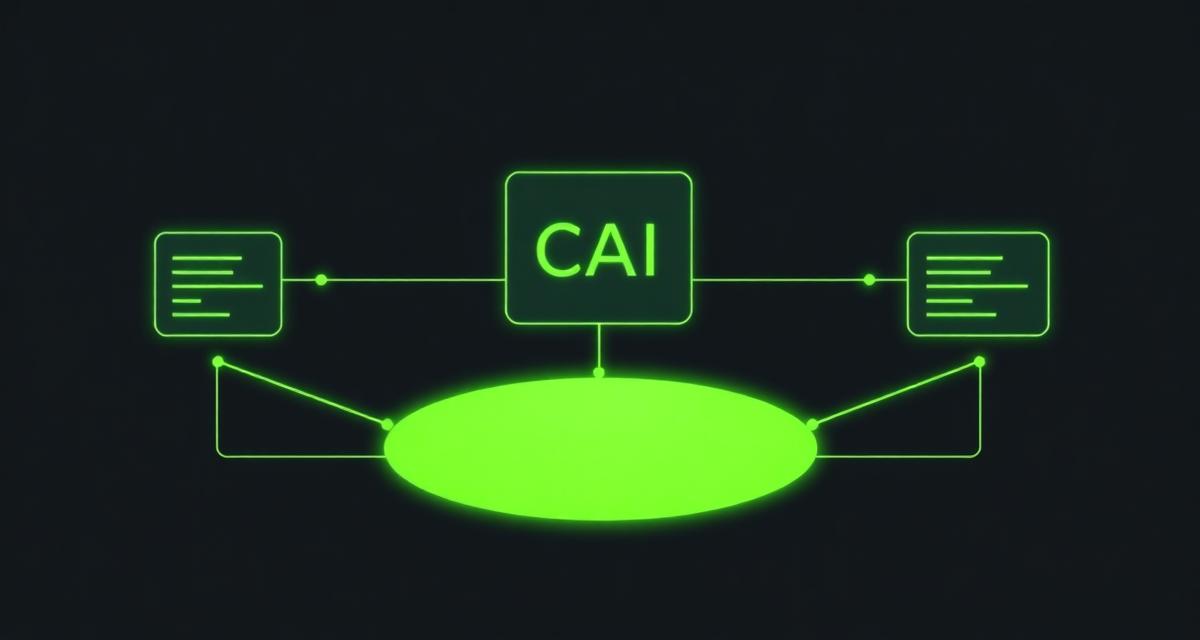
What the Codex App Server actually does, why decoupling agent logic matters, and how to integrate it with VS Code, CLI & custom apps. Real code examples.
OpenAI Codex App Server: Decoupling Agent Logic from UI
The world of AI-powered software development is evolving rapidly, and OpenAI's Codex platform is at the forefront of this transformation. One of the most significant architectural decisions in the Codex ecosystem is the Codex App Server—a powerful interface that cleanly separates agent logic from the user interface, enabling developers to build rich, deeply integrated experiences.
What is the Codex App Server?
The Codex App Server powers OpenAI's rich client experiences, including the popular Codex VS Code extension. It provides a standardized interface for:
Authentication handling
Conversation history management
Approval workflows for agent actions
Streamed agent events for real-time feedback
The implementation is fully open source, written in Rust for performance and security, making it transparent and extensible for developers worldwide.
The Architecture: Agent Loop Fundamentals
At the heart of Codex lies the agent loop—the core logic orchestrating interactions between users, models, and tools.
How the Agent Loop Works
User Input: The agent receives input and prepares a prompt for the model.
Model Inference: The prompt is tokenized and sent for inference via the Responses API.
Tool Execution or Response: The model either produces a final response or requests tool calls.
Iteration: For tool calls, the agent executes them, appends output to the prompt, and re-queries the model.
Completion: The loop ends when the model produces an assistant message.
This design allows Codex to perform complex, multi-step software engineering tasks while maintaining a clear separation of concerns.
Protocol Design: JSON-RPC Over stdio
The App Server uses a bidirectional communication protocol based on JSON-RPC 2.0 over stdio, similar to the Model Context Protocol (MCP).
Benefits include:
Cross-platform compatibility (Windows, macOS, Linux)
Language-agnostic integration via standard I/O streams
Real-time streaming of agent events
Core Primitives
Thread: A conversation between user and agent, containing multiple turns
Turn: A single user request and the resulting agent work
Item: Units of input/output (messages, commands, file changes, tool calls)
Building Custom Integrations
For developers looking to embed Codex capabilities into their products, the App Server provides a straightforward integration path:
import { spawn } from "node:child_process";
Continue Reading
- AI for Small Business in South Africa: A Practical Guide for 2026
- Retrieval Augmented Generation: The Future of Context-Aware AI
- How to Build a Website in South Africa in 2026: The Complete Guide
- SEO in South Africa 2026: The Complete Guide to Ranking #1 on Google
Need help? Get in touch or explore services and projects.
LET’S TALK
Have a project in mind after reading this? Send a brief and I usually reply within 24 to 48 hours.