Spatial Computing for Web Developers: Getting Started in 2026
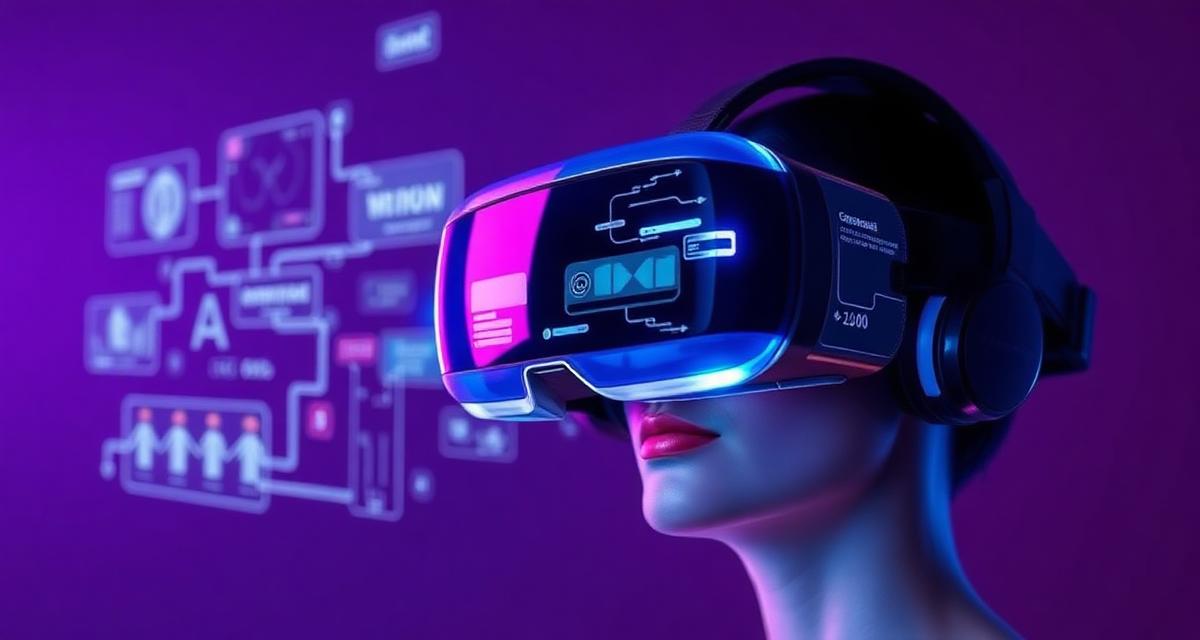
A practical guide to building immersive web experiences as spatial computing goes mainstream.
With Apple Vision Pro, Meta Quest 3, and a continuous wave of sleek AR glasses hitting the consumer market, spatial computing has officially broken out of its niche. It is no longer just for hardware enthusiasts or gamers. However, for web developers, the most exciting part of this paradigm shift isn’t the hardware—it’s how we access it.
You don’t need to spend months mastering Unity, Unreal Engine, or platform-specific native XR SDKs to build immersive spatial software. The web ecosystem is ready right now.
WebXR Maturity: Immersive Experiences Direct to the Browser
The WebXR Device API has quietly matured into a robust, highly stable standard. When you combine this native browser capability with the declarative power of Three.js and React Three Fiber, the web becomes a premium deployment platform for immersive design.
The absolute superpower of WebXR is the elimination of distribution friction. There are no app store approvals, no 30% digital distribution taxes, and zero installation gatekeeping. A user clicks a link or scans a QR code, and they are immediately standing inside your experience.
Designing for Physical Space: The New Interaction Primitives
Designing a spatial user interface requires discarding the 2D box entirely. On a flat screen, layout is defined by container boundaries and pixel alignments. In spatial computing, your design primitives are entirely human:
Depth & Z-Index Scaling: UI layers are no longer virtual overlays; they have physical distance, casting shadows and reacting to the ambient lighting of the user's actual room.
Gaze and Gesture Interaction: Precision mouse clicks are replaced by eye-tracking intent and micro-gestures. Hover states must map to focal targets smoothly.
3D Spatial Audio: Sound is positional. Audio cues must physically emanate from the specific coordinates of a UI element to guide user attention naturally.
To bridge the gap between design and development, modern product teams are leaving flat canvases behind. Tools like Spline and Figma’s 3D spatial features have become mandatory for prototyping interactive spatial depth long before a single line of production code is written.
Engineering for Real-Time Performance on Mobile Chipsets
Spatial computing is unforgiving when it comes to performance. While a dip to 45 frames per second (fps) on a standard web page is slightly annoying, a similar drop in a headset causes immediate, physical motion sickness.
XR experiences demand a minimum, unthrottled 90fps. To achieve buttery-smooth interactions on mobile chipsets like the Snapdragon XR2 powering standalone headsets, aggressive optimization is non-negotiable:
Level-of-Detail (LOD) Systems: Dynamically swapping high-poly models for ultra-lightweight variants when they move away from the user’s focal point.
Instanced Rendering: Consolidating hundreds of identical 3D assets (like UI modules, particles, or environmental elements) into a single draw call.
Texture Compression: Migrating standard PNGs and JPEGs to GPU-friendly formats like KTX2 or Basis Universal, radically freeing up VRAM.
Client Takeaway: The Spatial Web is an Early-Mover Advantage
The spatial web is a textbook "early mover" opportunity. Brands and companies that establish their presence in WebXR today are capturing unprecedented user attention while establishing the design patterns of tomorrow.
I work with forward-thinking clients to design and architect WebXR experiences that deliver measurable engagement today while naturally scaling as next-generation hardware becomes mainstream.
Next Steps to Future-Proof Your Systems
Building cutting-edge interfaces requires an intentional alignment between modern frontends, optimization guardrails, and your broader local digital strategy. Explore the guides below to stay ahead of the technical curve.
To help you navigate emerging technical shifts:
Why TypeScript Became #1: The AI-Driven Rise— Exploring the symbiotic relationship between strongly-typed codebases and Large Language Models, and why context-aware AI assistants made TypeScript the absolute default for software engineering.
How to Build a Website in South Africa in 2026: The Complete Guide — A comprehensive, step-by-step structural and strategic blueprint for launching high-performance web platforms tailored for local business needs.
Energy-Efficient Coding: Sustainable Software Development — How computational efficiency is moving from a hardware constraint to a core engineering metric, focusing on building lightweight software that actively reduces hosting overheads.
Additional Industry Insights
If you are tracking how market shifts and technical performance trends affect developers and digital businesses globally, review these deep-dives:
Tailwind Labs Lays Off 75% of Engineers: The AI Documentation Crisis — An analytical look at how structural changes in technical document consumption and AI code assistants have created unprecedented disruptions for open-source business models.
Want to know if your brand’s next digital step should involve WebXR, immersive 3D, or an ultra-fast headless application architecture? Send over your project ideas — I will review your requirements and get back to you within 24 hours with a straightforward technical approach and a fixed quote to bring it to life.
Get in touch or explore services and projects.
LET’S TALK
Have a project in mind after reading this? Send a brief and I usually reply within 24 to 48 hours.