Bókun Booking Widget Speed Optimization: Fixing Heavy JS Scripts That Slow Your Site
A slow Bókun widget doesn't just annoy visitors, it costs you tour bookings before the page even finishes loading. Here's how to find and fix the scripts responsible.
A visitor arrives on your tour page ready to book. The widget takes four seconds to appear. They wait, get impatient, and switch tabs to check a competitor instead. That is not a hypothetical, that is exactly what page-speed data shows happening on tour operator sites every day.
Bókun is a capable, widely used booking engine for activity and tour operators, but its embed script was built for broad compatibility, not for speed. Dropped onto a page without any thought, it can single-handedly double your load time. The fix is not to abandon Bókun, it is to be deliberate about how and when its script loads, which is the exact problem our Bókun integration service was built to solve.
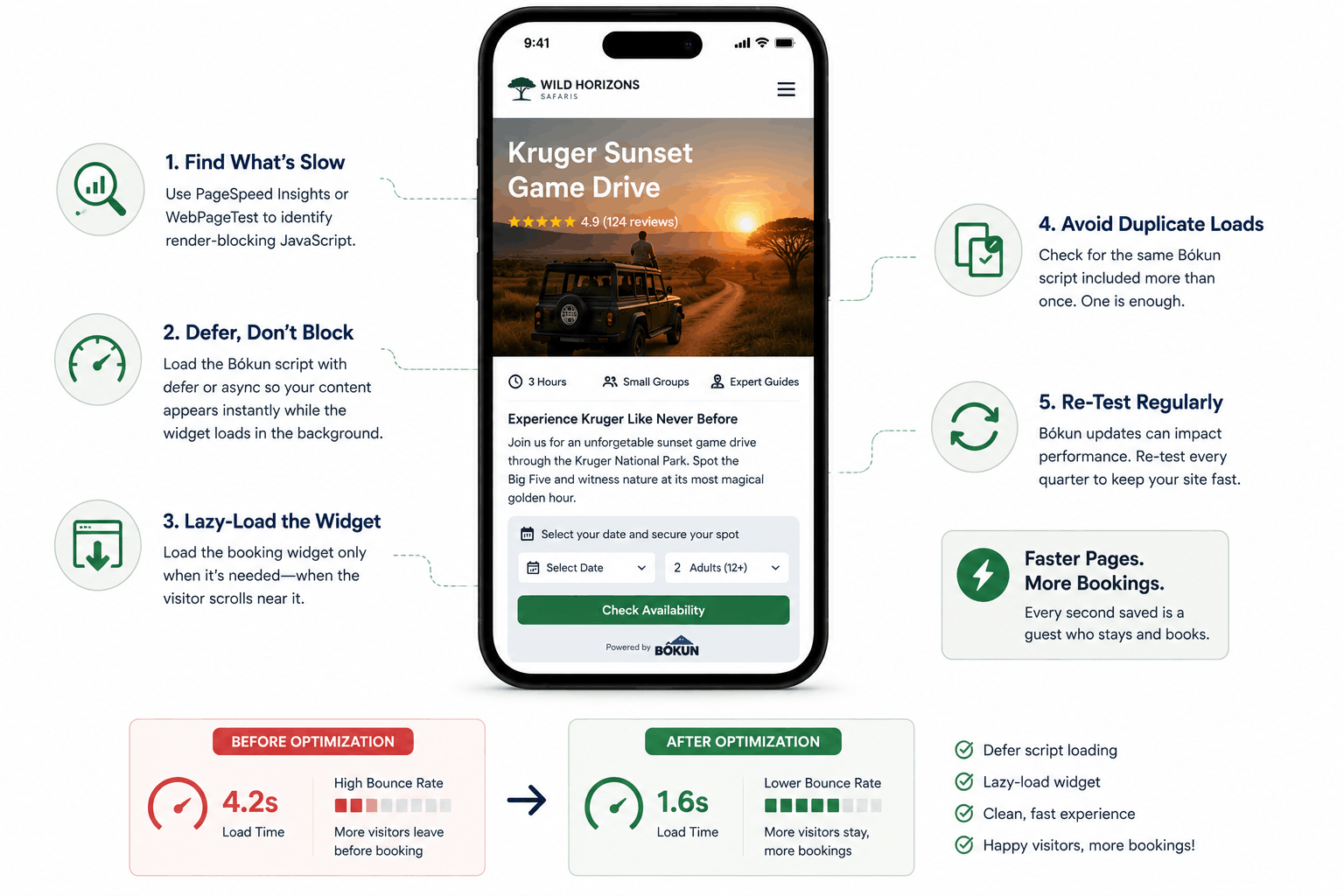
1. Find Out What Is Actually Slow
Before optimizing anything, run your tour page through a tool like Google PageSpeed Insights or WebPageTest and look specifically for render-blocking JavaScript. In most Bókun embeds, the widget script loads synchronously in the page head, meaning the browser stops everything else to fetch and execute it before showing your visitor a single word of content.
2. Defer, Do Not Block
The single highest-impact fix is moving the Bókun script tag to load with a defer or async attribute rather than blocking the initial page render. This alone lets your hero image, headline, and tour description appear immediately, while the booking widget catches up a moment later underneath.
3. Lazy-Load the Widget Below the Fold
If your booking widget sits further down the page, below your tour description and photos, there is no reason to load it at all until the visitor scrolls near it. Lazy-loading the widget based on scroll position keeps your initial load lean and fast, which matters enormously for mobile visitors on slower connections.
4. Watch for Duplicate Script Loads
A common, easily missed issue: the same Bókun embed script accidentally included twice, once in a template header and again inline on a specific page. Duplicate script loads silently double your JavaScript payload with zero benefit. Audit your page source for repeated script tags before assuming the widget itself is the bottleneck.
5. Re-Test After Every Bókun Update
Bókun updates its own embed code periodically, sometimes changing script behavior in ways that undo your optimization work. Treat widget speed as something to recheck quarterly, not something you fix once and forget.
A tour operator's website has one job at the moment a visitor lands: get out of the way fast enough that curiosity turns into a completed booking before doubt has time to creep in. Widget speed is not a technical detail, it is a conversion decision.
LET’S TALK
Have a project in mind after reading this? Send a brief and I usually reply within 24 to 48 hours.